
In the field of electronic components, pure inductive circuits play an extremely important role. This article aims to provide an in-depth analysis of purely inductive circuits, a special circuit system composed of inductors, and explore its working principles, characteristics, and its importance in practical applications. As the core component of the circuit, the inductor is not only responsible for storing magnetic field energy, but also plays a key role in the current change process to ensure the stable operation and efficiency of the circuit.
How pure inductive circuits work
A purely inductive circuit, as its name suggests, is a circuit composed of purely inductive components. This type of circuit is characterized by the ability of its main component, the inductor, to store and release magnetic field energy. The role of the inductor in the circuit cannot be underestimated. It responds to changes in current by generating a magnetic field in its coil, thereby achieving energy conversion and regulation. During this process, the inductor displays a unique delayed response to changes in current. This is because the magnetic field generated inside it takes time to build up and dissipate, thus affecting the rate of current change.
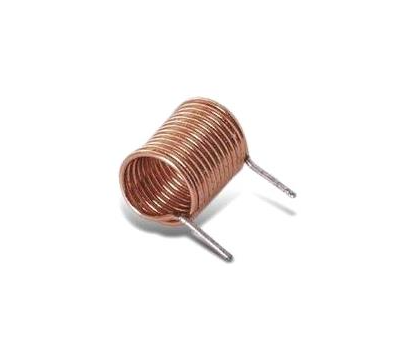
Characteristic analysis of purely inductive circuits
Delayed response: A distinctive feature of purely inductive circuits is their ability to delay response to changes in current. When the voltage in the circuit changes, the inductor resists this change by generating a reverse electromotive force, causing the rate of change of current to be limited. This characteristic allows purely inductive circuits to exhibit extremely high stability when dealing with sudden changes in current.
Impedance characteristics: In AC circuits, purely inductive circuits exhibit unique impedance characteristics. The impedance of an inductor is proportional to the frequency of the signal, meaning that as frequency increases, the resistance provided by the inductor increases. This characteristic makes pure inductive circuits behave differently at different frequencies, providing a theoretical basis for their application in frequency control and signal processing.