
Direct marking method:
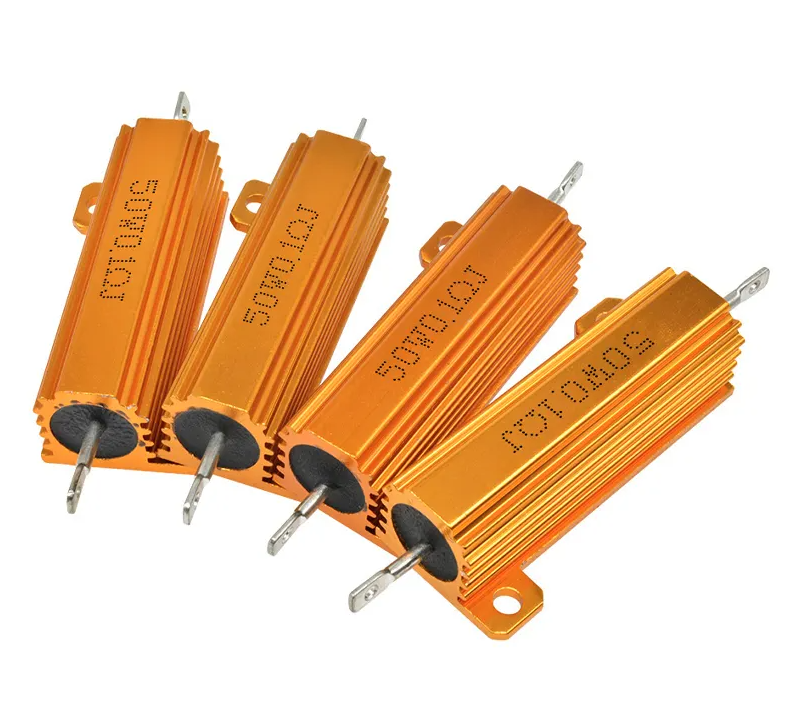
The direct marking method is the most intuitive marking method. The resistance value is expressed by marking numbers and unit symbols on the surface of the resistor. The allowable error is usually expressed as a percentage. If the deviation is not noted, the default is ±20%. This method is simple and easy to understand, but it may not be accurate enough when the requirements for precision circuits are high.
Text symbol method:
The text symbol method uses a combination of Arabic numerals and text symbols to express the nominal resistance value, which has strong regularity. The number before the symbol indicates the integer resistance value, the following number indicates the decimal resistance value, and the text symbol indicates the allowable deviation. This method is widely used in some circuits that require higher precision.
Digital method:
The numerical method expresses the nominal value as a three-digit number, the first and second digits are the effective value, and the third digit is the exponent, that is, the number of zeros, and the unit is Europe. Deviations are usually represented by literal symbols. This method has certain advantages in digital systems, but its applicability to specific scenarios is limited.
Color marking method:
The color marking method is an intuitive and widely used marking method, which uses bands or points of different colors to represent the nominal resistance value and allowable deviation. Among them, the colors of the color wheel correspond to different numbers, and gold and silver represent ±5% and ±10% deviations respectively. This method is suitable for marking general electronic components, and is especially commonly used abroad.
Through in-depth analysis of the above four methods, the most appropriate resistor resistance marking method can be selected according to actual needs, thereby ensuring the accuracy and stability of circuit design.