
Selection and influence of coil voltage
In the design of electronic equipment, relays are an important electronic control component, and their performance directly affects the stability and reliability of the entire system. Therefore, the correct selection of coil voltage is the key to ensuring the normal operation of the relay. Ideally, the coil's operating voltage should match its rated voltage. This is because using a coil voltage lower than the rated operating voltage may cause the relay to not operate properly, while exceeding the maximum rated operating voltage may impair the relay's performance. Especially when using an amplifier circuit to excite the coil, it is necessary to ensure that the voltage value between the two terminals is accurate. Excessively high working voltage will not only cause the coil temperature to rise too high, thereby damaging the insulating material, but also reduce the working safety of the relay. For magnetic latching relays, the excitation or reset pulse width should be at least three times the pickup or reset time to avoid the product being in an unstable state. In addition, when using solid-state devices to excite the coil, the withstand voltage of the device should be above 80V and the leakage current should be small to ensure that the relay can be released reliably.
Transient voltage suppression
The moment the relay coil is powered off, it may generate a reverse peak voltage that is more than 30 times the rated operating voltage, posing a serious threat to electronic circuits. In order to suppress this transient voltage, the peak clipping method of parallel diodes or resistors is usually used. Doing this can control the reverse peak voltage within 50V, but it should be noted that a parallel diode may extend the release time of the relay by 3 to 5 times. When there are strict requirements on the release time, it can be optimized by connecting an appropriate resistor in series to one end of the diode.
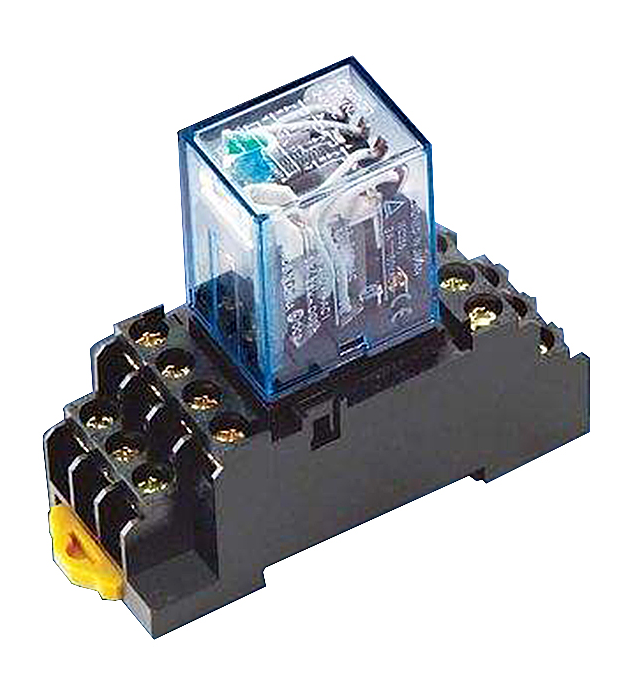
Excitation power requirements
In order to ensure the stable operation of the relay, the selection of the excitation power supply is equally important. The regulation rate of the power supply should not exceed 10% at 110% rated current, or the output impedance should be less than 5% of the coil impedance, and the ripple voltage of the DC power supply should be less than 5%. For AC power, the waveform should be close to a sine wave, the waveform coefficient should be between 0.95 and 1.25, the waveform distortion should be controlled within ±10%, and the frequency change should be controlled within ±1Hz or ±1% of the specified frequency, whichever is greater . In addition, the output power of the power supply should not be less than the power consumption of the coil to ensure the reliable operation of the relay.
Parallel and series power supply of relays
In practical applications, multiple relays may be required to be powered in parallel or in series. When powering in parallel, if the reverse peak voltage and inductance between relays are different, the release time of the low-inductance relay may be prolonged. Therefore, to avoid mutual interference, it is recommended to control each relay individually before connecting them in parallel. When powering in series, relays with different coil resistances and power consumption may cause high-current relays to fail to work reliably. Only relays of the same specifications and models are recommended for powering in series. In addition, a series resistor should be used to share the voltage exceeding the rated voltage of the relay coil to suppress the increase in reverse peak voltage.